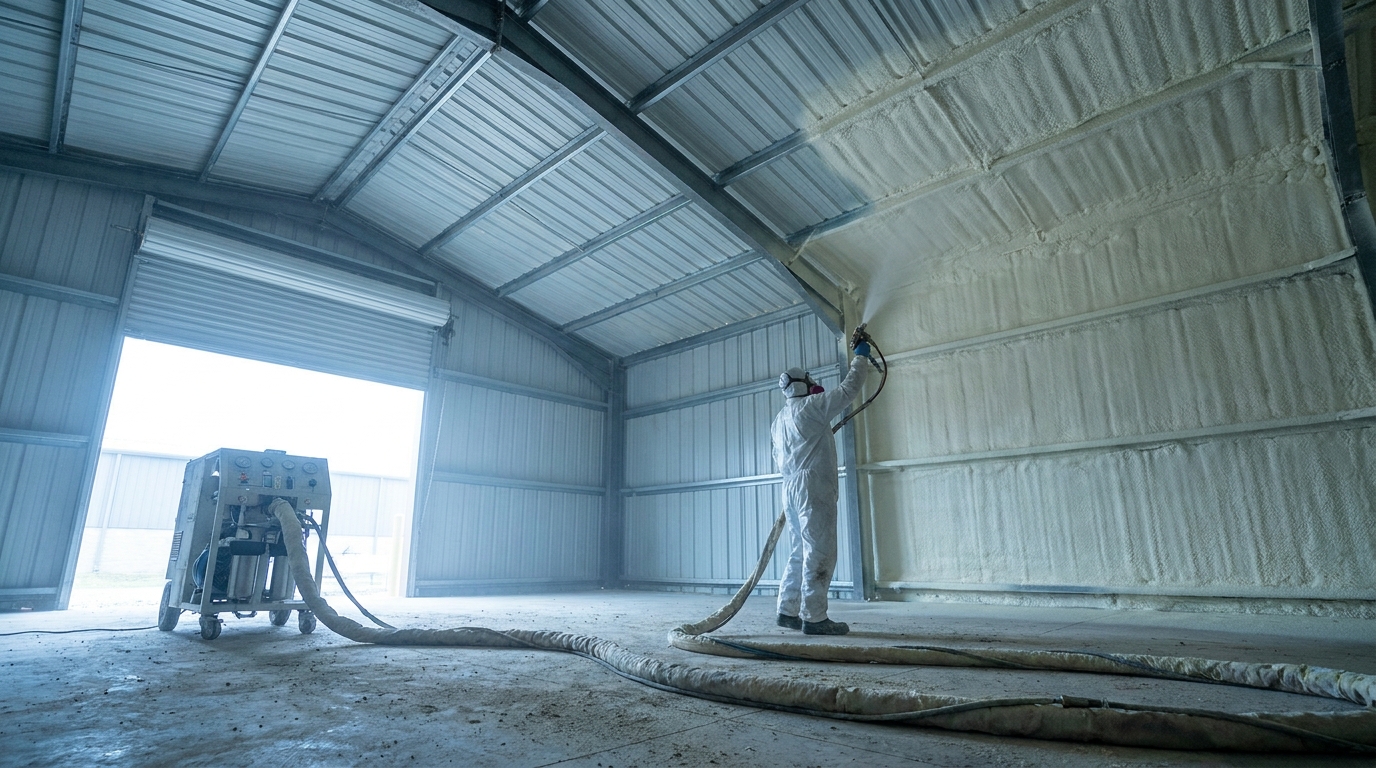
Commercial Spray Foam Insulation in Walsall
Warm, dry, hard-working buildings. We fit open and closed cell spray foam insulation for commercial units, farm buildings, workshops, containers and garden rooms across the West Midlands.
Last winter a joiner just outside Walsall told us his steel-framed workshop was so cold he could see his breath by the bandsaw. Worse, the metal roof dripped with condensation every morning and rusted his tools. He'd tried a couple of electric heaters and just watched his bills climb. We sprayed closed cell foam right onto the inside of the steel, and the change was night and day. No more drips, the heat stayed in, and he could finally work in there through January.
That is what spray foam insulation does for the right building. It seals every little gap in one go, sticks to almost any surface, and turns a cold, damp shell into a space you can actually use. This page is all about where it works brilliantly and how we do it.
First, an honest word: not for your house loft
Before we go further, we need to be straight with you. Spray foam does not belong on the underside of a normal house roof. In a domestic loft it can trap moisture against the timbers and cause damp, and it often blocks a mortgage or sale. In fact, stripping it out of homes is a big part of what we do — see our spray foam removal service. So when we talk about spray foam insulation here, we mean outbuildings, commercial units, farm buildings, containers and garden rooms. That is where it earns its keep.
Why spray foam works so well in the right buildings
Most insulation comes in slabs or rolls that you cut and fit around things, which always leaves gaps. Spray foam is different. It goes on as a liquid and expands to fill every corner, gap and awkward shape, then sets hard. That means no cold spots and no draughts sneaking through. On a cold steel building it also does something rolls cannot — it bonds to the metal and stops the surface sweating, which kills condensation at the source. Closed cell foam even adds a bit of strength and stiffness to the structure.
Here is what that gets you:
- A warmer space in winter and a cooler one in summer.
- No draughts, because every gap is sealed in one pass.
- No more condensation dripping off cold steel.
- Lower heating bills, since far less heat leaks out.
- A bit of extra strength and stiffness from closed cell foam.
- A quick job that lasts for decades.
Signs your building could do with spray foam
Not sure if it is worth it? These are the things business owners and farmers tell us again and again:
- The roof or walls drip with condensation on cold mornings.
- It is freezing in winter and like an oven in summer.
- You cannot heat it without the bills going through the roof.
- Tools, stock or animal feed keep going rusty or damp.
- You would love to use the space all year, but it is just too cold.
- It is a metal or tin-roofed building that is a pain to insulate any other way.
If a few of those sound familiar, a quick survey will tell you what would help. There is no charge and no pressure.
The types of spray foam we fit
There are two kinds, and they do different jobs. Here is what each one is and when we would use it. Under each you'll find a photo from our own work.
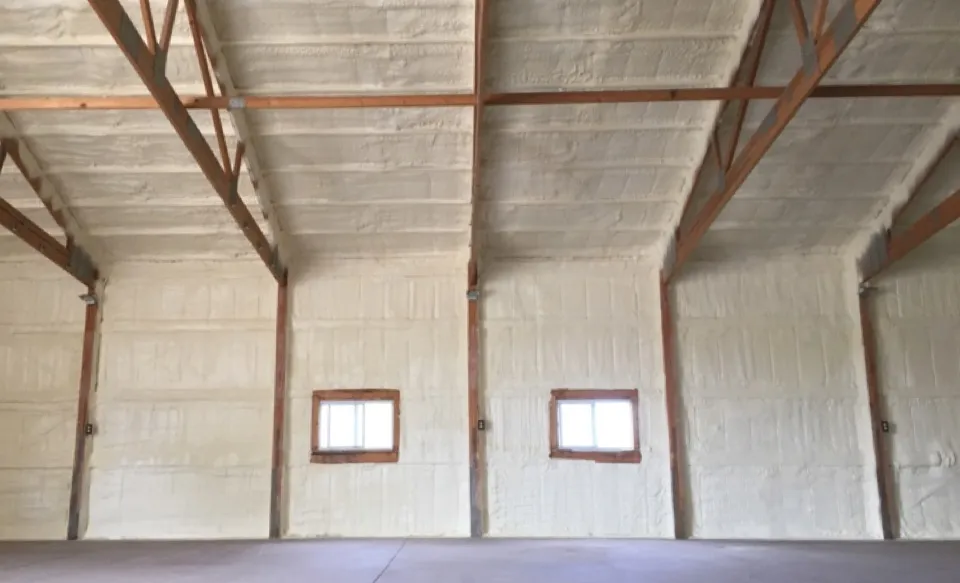
Open Cell Spray Foam Insulation
Open cell is the softer, lighter foam. It is full of tiny open bubbles, so it stays a little bit breathable and it is great at soaking up sound. It is also the cheaper of the two. We use it inside workshops, garden rooms and outbuildings where you mainly want warmth and a quieter space, and where damp from outside is not a big worry. It fills the wall and ceiling cavities nicely and takes the chill off fast. Because it stays flexible, it copes well with timber that moves a little with the seasons, and its sound-deadening makes a real difference in a noisy workshop or a music room at the bottom of the garden.
Closed Cell Spray Foam Insulation
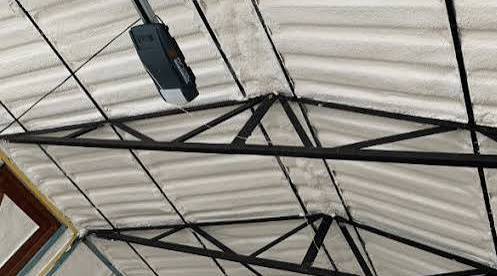
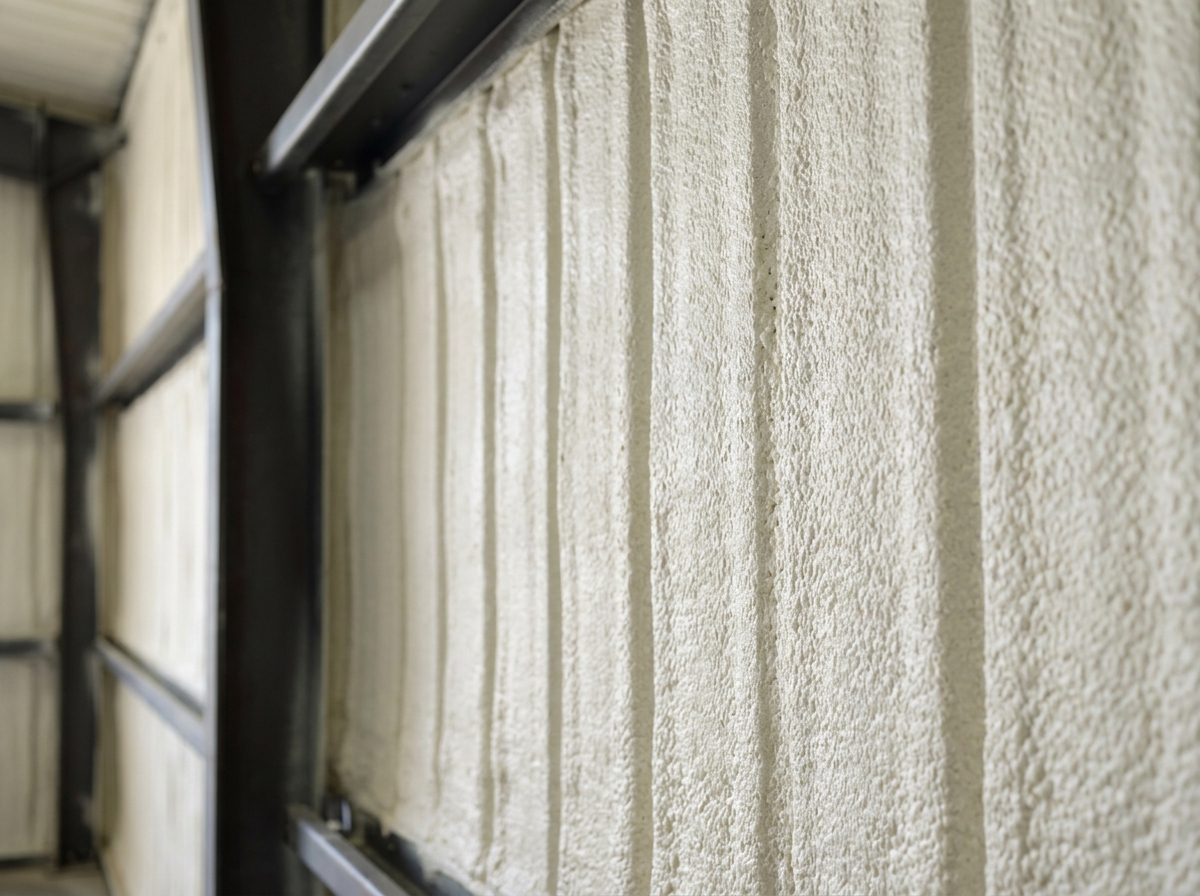
Closed cell is the tough one. Its bubbles are sealed shut, which makes it rigid, waterproof and a much stronger insulator inch for inch. It is the foam we reach for on metal-framed units, shipping containers and farm buildings. Because it seals cold steel completely, it stops the condensation and dripping that ruins stored kit and animal feed. It costs more than open cell, but for a cold, damp metal building it is usually the right call. You also need less of it to hit the same warmth, so it is handy where space is tight, like the inside of a container. And because it firms the structure up a touch, it is a favourite for older tin roofs that have seen better days.
Where We Spray It — Containers, Garden Rooms, Outbuildings & Farm Buildings
Half the job is knowing where spray foam is the smart choice. We spray shipping containers turned into offices or stores, garden rooms and home studios, workshops and unit spaces, stables and kennels, and all sorts of agricultural and farm buildings. If you have a cold, tin-roofed, hard-to-insulate space, there is a good chance foam is the tidiest answer. We will tell you honestly if a cheaper option would do the same job.
Doing it properly and safely
Spray foam is a specialist job. It needs the right rig, the right mix, and proper protective gear while it is going on. Our own crews run the project from the first survey to the final tidy-up, and for the spray itself we work hand in hand with our hand-picked foam specialists, so it is done right and to spec. We check the building first, sort any prep, protect what needs protecting, and lay the foam at an even thickness. New commercial and agricultural buildings also have to meet the energy standards in the Building Regulations (Approved Document L), and we fit to suit.
Is spray foam safe?
It is a fair question, and one we get a lot. While the foam is being sprayed it gives off fumes, which is why our specialists wear full breathing gear and we keep everyone else out of the way. But once it has cured — usually within a few hours — it is inert and completely safe to be around. The closed cell foams we use for commercial and agricultural jobs are fire-rated for the job too. We only ever fit products that meet the right standards, and we are happy to show you the paperwork.
We also get the thickness right. Too thin and it will not do its job; too thick and you are paying for foam you do not need. We work out the right depth for your building and the result you want, then lay it evenly across the whole surface so there are no weak spots.
What it's like working with us
We are a local outfit, not a faceless call centre. We carry £5m public liability insurance, we are registered with the ICO for handling your details properly, we back our work with a 10-year guarantee, and you only pay once the job is done. Every job starts with a free survey and honest advice — including telling you when spray foam is not the answer.
Is it worth the money? For most business and farm buildings, yes. A workshop you could only use half the year suddenly earns its keep all twelve months, and a warmer building costs less to heat. We will give you a straight answer on whether the numbers stack up for your place before you spend a penny.
If you have got a freezing workshop, a sweating steel building or an outbuilding you wish you could use all year, let's take a look. Give us a ring for a free, no-obligation survey and we'll tell you straight what would work best.


How It Works
From the first survey to the final tidy-up — here's what to expect when you work with us.
Free Survey
We look at your building, work out the right foam and thickness, and give you honest advice — no obligation.
Prep & Protect
We prepare the surfaces and cover anything that needs protecting before a drop of foam goes on.
Spray to Spec
Our foam specialists lay open or closed cell foam at an even thickness, sealing every gap.
Tidy Finish
The foam sets in minutes. We clean up and hand you back a warm, dry, usable space.
What Our Customers Say
Trusted by businesses and homeowners across the West Midlands — here's what they have to say.
"Our steel workshop dripped with condensation all winter and rusted the tools. They sprayed closed cell foam onto the roof and walls and it stopped dead. Warm and dry now."
"We turned a shipping container into an office for the yard. They foamed the whole thing and it's genuinely warm now, even in a cold snap. Tidy job, no fuss."
"Honest from the start. They told me my house loft foam needed removing, not adding to, and then sorted the insulation in my workshop separately. Straight talkers."
Frequently Asked Questions
It depends on the size of the building, the foam type, and how easy the space is to get at. Closed cell costs more than open cell because it is denser and higher performance. We give you a clear written quote after a free survey, with no obligation.
Open cell is softer, breathable and cheaper, and it is great for warmth and sound-deadening inside workshops and outbuildings. Closed cell is rigid, waterproof and adds strength, which makes it the go-to for metal-framed units, shipping containers and farm buildings where you also want to stop condensation on cold steel. We will recommend the right one after seeing your building.
Yes. Cold metal sweats when warm damp air hits it. Closed cell spray foam bonds straight to the steel and seals it, so the warm air never touches the cold surface and the dripping stops. It is one of the main reasons farmers and businesses call us.
No, and we will always be straight with you about that. Spray foam sprayed onto the underside of a house roof can trap moisture and cause mortgage and damp problems. That is the very thing we remove from homes. Spray foam belongs in outbuildings, commercial units, containers and farm buildings, not domestic loft roofs.
Most jobs take a day or two, depending on the size of the building and how much prep is needed. The foam itself goes off within minutes, so the space is usable again quickly. We give you a clear timescale after the free survey.
Cold Building? Let's Warm It Up.
Book a free, no-obligation survey for your commercial unit, farm building, workshop, container or garden room. We'll recommend the right foam and give you a fixed-price quote.